

How Computer Vision is Transforming Human Perception and Interaction
Artificial intelligence continues to push the boundaries of how we see and engage with the world. Among its most revolutionary advancements is computer vision—a technology that enables machines to interpret and understand visual data with remarkable accuracy. But as this technology evolves, one critical question emerges:
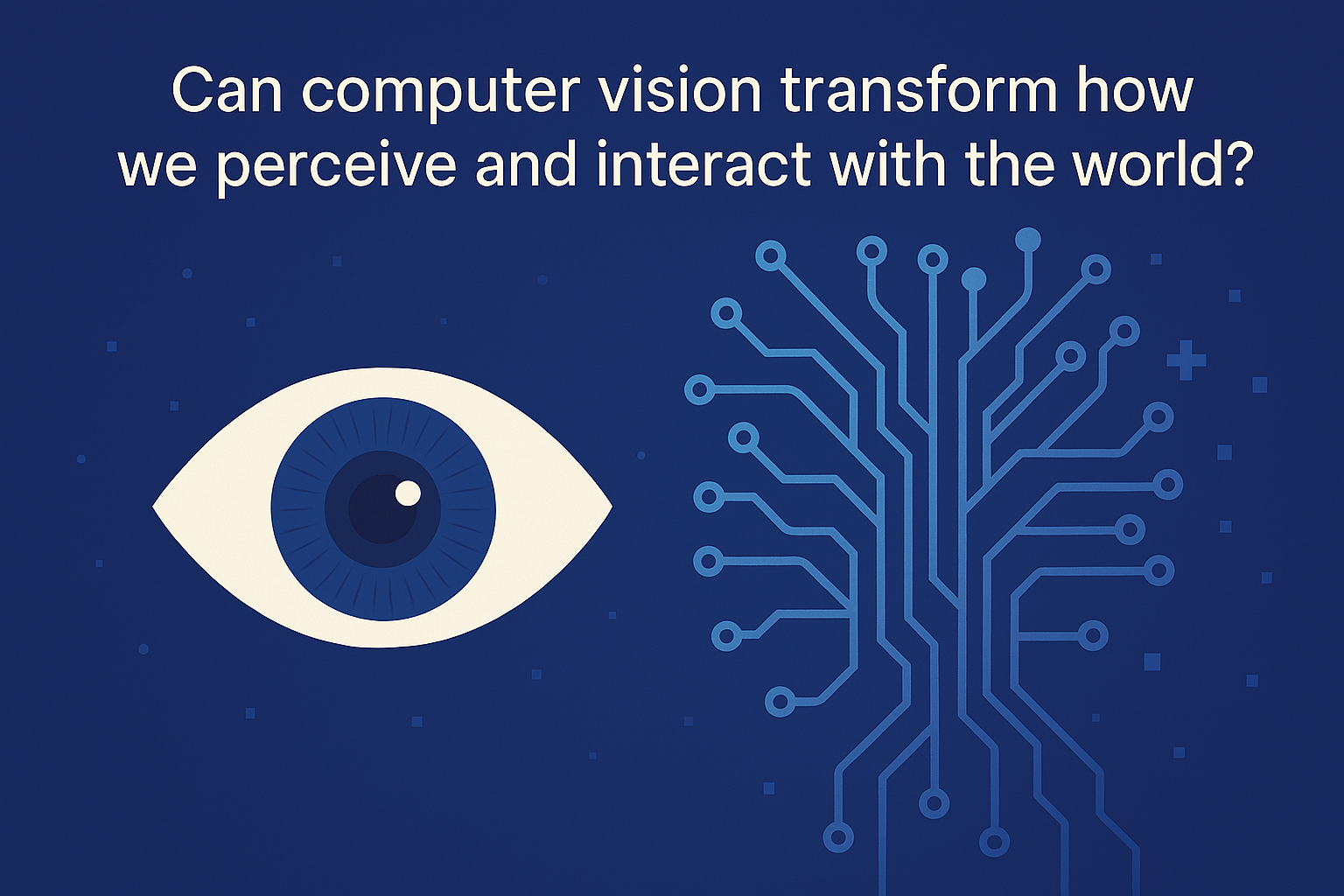
Can computer vision transform how we perceive and interact with the world?
The answer holds the potential to redefine AI’s role for individuals, societies, and nations alike.
From Human Sight to Machine Vision
Human vision is one of our most powerful senses—allowing us to navigate our surroundings, recognize patterns, and form perceptions. But unlike human sight, computer vision doesn’t just “see”; it analyzes, deciphers, and predicts. It enables machines to recognize faces, detect emotions, interpret objects, and even understand contextual depth within images.
With the rise of deep learning models like Faster R-CNN, Mask R-CNN, and U-Net, computer vision is moving beyond static recognition into real-time decision-making and automation. Autonomous vehicles, medical imaging, surveillance, and smart city infrastructure are just a few examples where AI-driven visual systems are reshaping industries.
How Computer Vision Reshapes Human Interaction
Beyond enhancing efficiency, computer vision is redefining human behavior and decision-making. Consider how facial recognition impacts privacy debates or how AI-powered surveillance influences security policies. These advancements provoke deeper questions:
- Are machines enhancing human vision or replacing it?
- How do biases in training data affect AI-driven visual interpretations?
- Can AI develop a more “neutral” lens than human perception?
While AI models can process vast amounts of data faster than humans, they inherit biases from datasets. A misinterpretation by an AI system—whether in facial recognition or predictive analytics—can have ethical, legal, and societal consequences.
The Future: Harmonizing AI Vision with Human Ethics
As AI vision technology advances, ensuring ethical alignment and transparency will be crucial. Governments, industries, and researchers must work together to establish standards that balance innovation with responsible deployment.
The impact of AI on human perception isn’t just technological—it’s philosophical. Will it make us more objective by eliminating biases, or will it create new distortions in how we see the world?
The answer to this question will define AI’s role—not just in shaping industries but in reshaping human understanding itself.
 seemanair.com
Leave a comment