

The Art of AI Trust: Painting a Future of Responsible Intelligence
Imagine standing before an unfinished canvas, brush in hand, contemplating the first stroke. Every choice—the colors, the textures, the composition—defines the final masterpiece. AI, like art, is shaped by the hands that create it, reflecting both vision and vulnerability. But what happens when the brushstrokes are too bold, too unpredictable, or even distorted by unseen biases?
In our pursuit of intelligent machines, AI Trust and Risk Management (AI TRiSM) emerges as the frame holding this canvas together, ensuring that innovation remains transparent, ethical, and secure. Much like an artist must balance control and freedom, AI must navigate the fine line between autonomy and accountability.
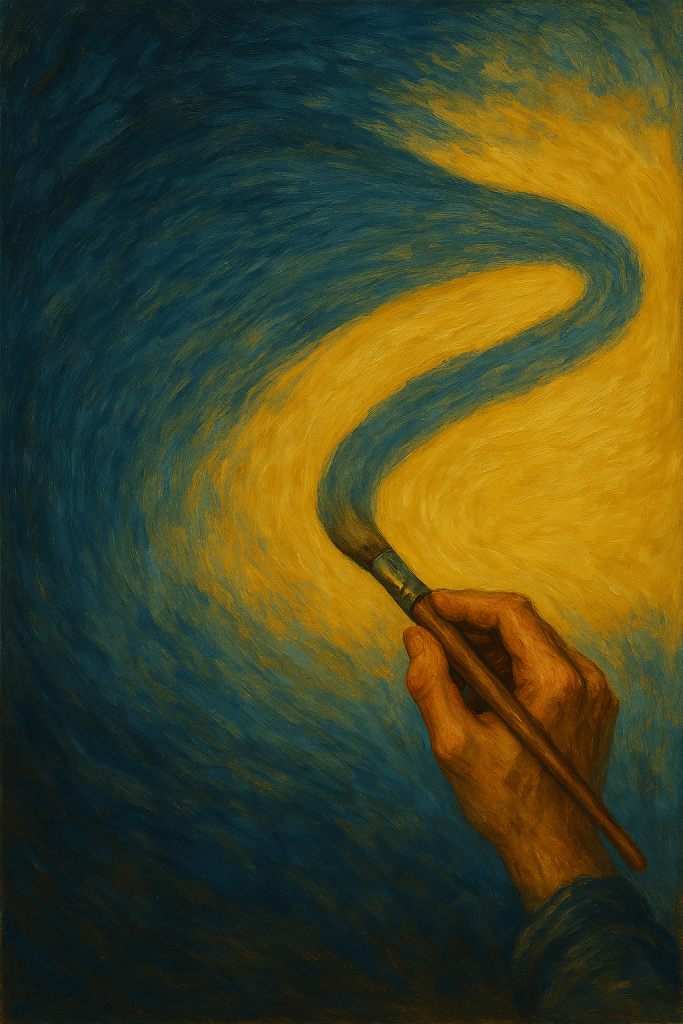
The Palette of AI Trust
To make AI truly trustworthy, we must work with a carefully curated palette—each color representing a principle guiding responsible development.
🖌 Explainability – No great artist conceals their process. AI models must reveal why they make decisions, not just deliver results. Techniques like SHAP values, LIME, and counterfactual explanations act as the brushstrokes revealing AI’s logic.
🖌 Risk Management – Before committing a stroke, an artist anticipates how it might impact the overall composition. AI governance does the same, addressing issues like bias mitigation, adversarial robustness, and ethical alignment to prevent unintended consequences.
🖌 Security – Just as an artwork requires protection from external damage, AI must be safeguarded against adversarial attacks—subtle manipulations that disrupt models. Adversarial training, secure model ensembling, and anomaly detection help shield AI from malicious alterations.
🖌 Fairness – True artistry is inclusive. AI must ensure equitable outcomes across all demographics, using bias correction algorithms and fairness-aware learning methods to keep the system free from unintentional discrimination.
Trust as the Invisible Brushstroke
Some of the most profound elements of a painting aren’t visible but felt—just as AI trust isn’t always about what AI does, but how humans perceive it. Trust is fragile; a single flawed decision can erase confidence in an entire system.
Consider search engines powered by AI embeddings. If an AI-driven semantic search system ranks misinformation higher than verified sources, its trustworthiness erodes. In computer vision, if facial recognition incorrectly identifies individuals due to biased training data, the consequences are far-reaching. AI must hold itself accountable to truth, much like an artist must ensure their work aligns with their original intent.
The Ethical Canvas: Who Holds the Brush?
The question isn’t just about ensuring AI is trustworthy, but who is writing its future into algorithms. Ethical AI requires involvement from scientists, policymakers, philosophers, and everyday users—each contributing their brushstroke to the final masterpiece.
A painting that lacks harmony feels unsettling. An AI system without human oversight, societal responsibility, and ethical vision is no different. In this grand canvas of technological evolution, we are not merely observers—we are creators, shaping AI’s destiny with every stroke.
Conclusion: A Future Worth Painting
We stand at the intersection of art and intelligence, holding the brush that will define AI’s legacy. Will we paint with reckless ambition or with intentional wisdom? Will we let algorithms operate in secrecy, or demand clarity, fairness, and trust? The answers lie in the choices we make today.
AI’s greatest masterpiece is yet to be completed—but one thing is certain: its future is in our hands.
A Child’s Drawing, A Timeless Message for Our Future
This drawing, created in my childhood (hand-drawn of course :), and then photo-copied — I don’t have the original, only had this one copy) for a remote sensing project, carried a vision far beyond its paper and pencil—one where salt water could become a lifeline for barren lands, transforming them into lush green farmlands and thriving forests. At its core, the message remains timeless: the earth holds abundance, but its destiny depends on human wisdom and deliberate choices. The power to sustain, to regenerate, and to create harmony isn’t just in nature—it’s in us.

There is a missing word on the image “उगे” (I think I spilled some liquid on it…lol) which means “grow”, here is the complete sentence with meaning
खारा पानी करें स्वपन साकार, चारा उगे फूले-फले परिवार! – Salt water can make dreams come true, fodder can grow and families can prosper!
 seemanair.com
Leave a comment