

When the sun sets and darkness blankets the earth, a secret world begins to glow—literally. Bioluminescent insects, nature’s own light artists, illuminate forests, caves, and meadows with their ethereal glow. But what exactly are these glowing creatures, and why do they shine?
What Is Bioluminescence?
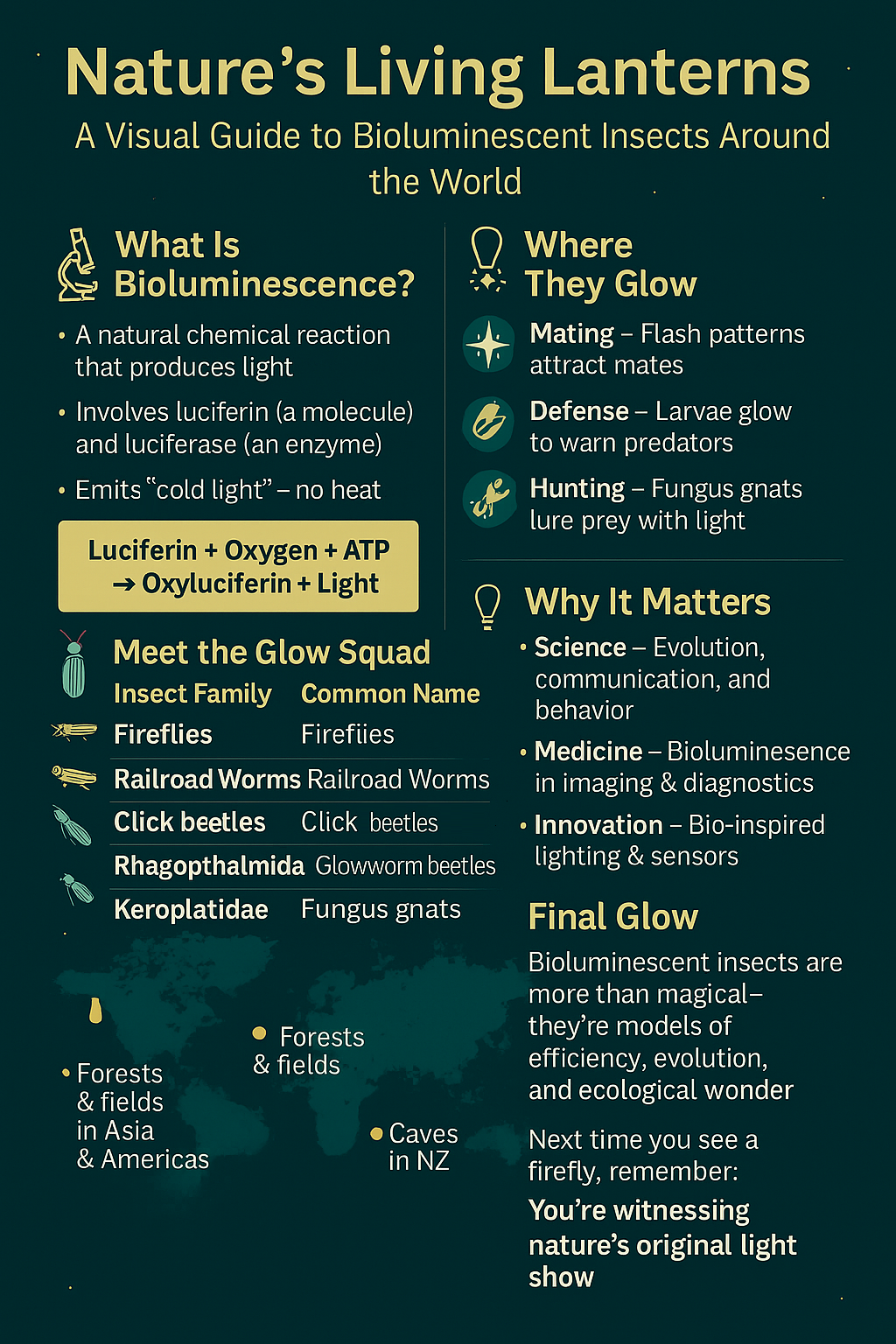
Bioluminescence is the production of light by living organisms through a chemical reaction involving luciferin (a light-emitting molecule) and luciferase (an enzyme). Unlike artificial light, this glow is “cold,” meaning it produces little to no heat—an incredibly efficient natural phenomenon.
The Glowing Cast: Insects That Light Up the Night
Here are the major families and species of insects known for their bioluminescence:
| Insect Family | Common Name | Region Found | Glow Color | Purpose of Glow |
|---|---|---|---|---|
| Lampyridae | Fireflies (Lightning Bugs) | Worldwide (esp. Americas, Asia) | Yellow-Green | Mating signals, predator deterrence |
| Phengodidae | Glowworm Beetles, Railroad Worms | Americas (esp. Central & South) | Green, Red | Mating, warning signals |
| Elateridae | Click Beetles (Pyrophorini) | Central & South America | Green | Defense, mate attraction |
| Rhagophthalmidae | Glowworm Beetles | Southeast Asia | Yellow-Green | Mating |
| Keroplatidae | Fungus Gnats (e.g., Arachnocampa) | New Zealand, Australia | Blue-Green | Prey attraction in caves |
Source: Wikipedia’s list of bioluminescent organisms
Where Do They Live?
Bioluminescent insects thrive in warm, humid environments—tropical forests, temperate woodlands, and even caves. For example:
- Fireflies light up summer nights in North America and Asia.
- Railroad worms glow in the leaf litter of South American forests.
- Glowworm gnats create starry ceilings in New Zealand’s Waitomo Caves.
Why Do They Glow?
Bioluminescence serves several evolutionary purposes:
- Mating: Fireflies use species-specific flash patterns to attract mates.
- Defense: Some larvae glow to warn predators of their toxicity.
- Predation: Fungus gnats lure prey with their glow in dark caves.
The Chemistry Behind the Glow
The reaction that powers this glow is:
- Luciferin + Oxygen + ATP → Oxyluciferin + Light This reaction is catalyzed by luciferase, and it’s so efficient that nearly 100% of the energy is emitted as light.
* Adenosine triphosphate, also known as ATP, is a molecule that carries energy within cells (reference).
What Can We Learn from Them?
Studying bioluminescent insects helps scientists understand:
- Evolutionary biology and communication
- Applications in medical imaging and biosensors
- Sustainable lighting and bioengineering
Designing Intuitive Systems: Lessons from Nature’s Living Lanterns
Bioluminescent insects don’t just glow—they communicate, adapt, and respond to their environment with remarkable clarity and efficiency. These traits offer powerful metaphors for how we can design human-centered, intuitive systems—especially in areas like monitoring, observability, and intelligent alerting.
1. Signal Clarity Over Noise
Fireflies use precise flash patterns to communicate with potential mates—each species has its own rhythm, reducing confusion in a crowded ecosystem.
Design Insight:
Monitoring systems should prioritize clear, context-aware signals over a flood of alerts. Just as fireflies avoid cross-talk, systems should:
- Use distinct visual or auditory cues for different alert types
- Employ adaptive thresholds to reduce false positives
- Highlight anomalies in context, not in isolation
2. Ambient Awareness
Glowworms in caves use soft, ambient light to lure prey—subtle, yet effective. Their glow is always “on,” but only intensifies when needed.
Design Insight:
Create ambient monitoring interfaces that:
- Provide passive awareness without overwhelming users
- Use color gradients or glow intensity to indicate system health
- Allow users to “zoom in” only when deeper investigation is needed
3. Distributed Intelligence
Bioluminescent insects operate in decentralized environments—each organism acts independently, yet collectively they create patterns (like synchronous firefly flashes).
Design Insight:
Build decentralized, intelligent agents within your system that:
- Monitor local conditions and report anomalies
- Collaborate to identify systemic issues
- Enable edge-based alerting before central systems even notice
4. Energy Efficiency
Nature’s glow is incredibly efficient—nearly 100% of the energy goes into light, not heat.
Design Insight:
Design systems that are:
- Resource-aware, minimizing compute and bandwidth usage
- Event-driven, activating only when needed
- Sustainable, both in performance and cognitive load
5. Intuitive UX Inspired by Biology
The glow of a firefly is instantly recognizable and universally understood. It doesn’t require training or documentation.
Design Insight:
Strive for intuitive interfaces that:
- Use natural metaphors (e.g., glow = attention, dim = idle)
- Offer progressive disclosure—show more detail only when needed
- Reduce friction by aligning with human cognitive patterns
From Forests to Frameworks
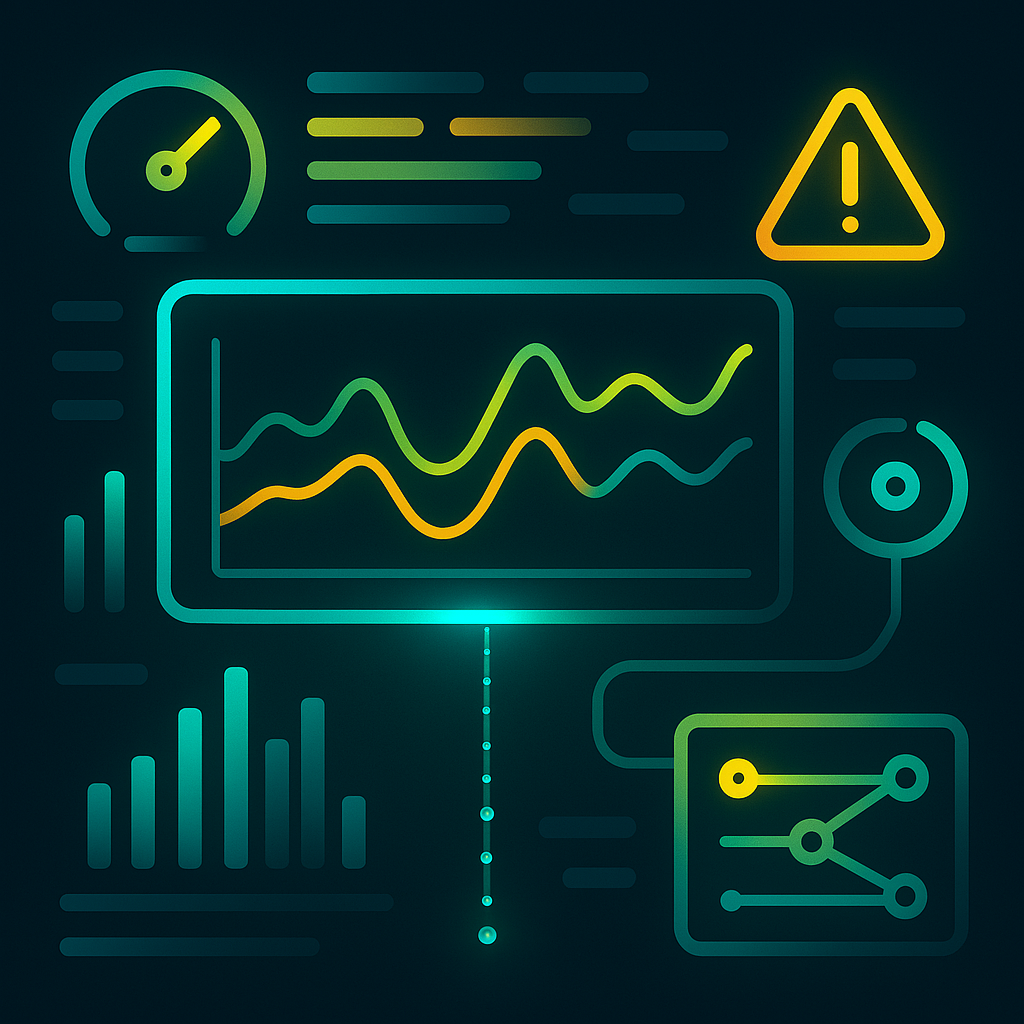
Bioluminescent insects show us that the best systems are not just functional—they’re elegant, adaptive, and deeply intuitive. Whether you’re designing a monitoring dashboard, an AI observability tool, or a user-facing alert system, let nature’s living lanterns guide your thinking.
✨ Final Glow
Bioluminescent insects are more than just a natural wonder—they’re a testament to evolution’s creativity and efficiency. Whether you’re watching fireflies dance in a summer field or marveling at glowworms in a cave, you’re witnessing a phenomenon that has fascinated humans for millennia.
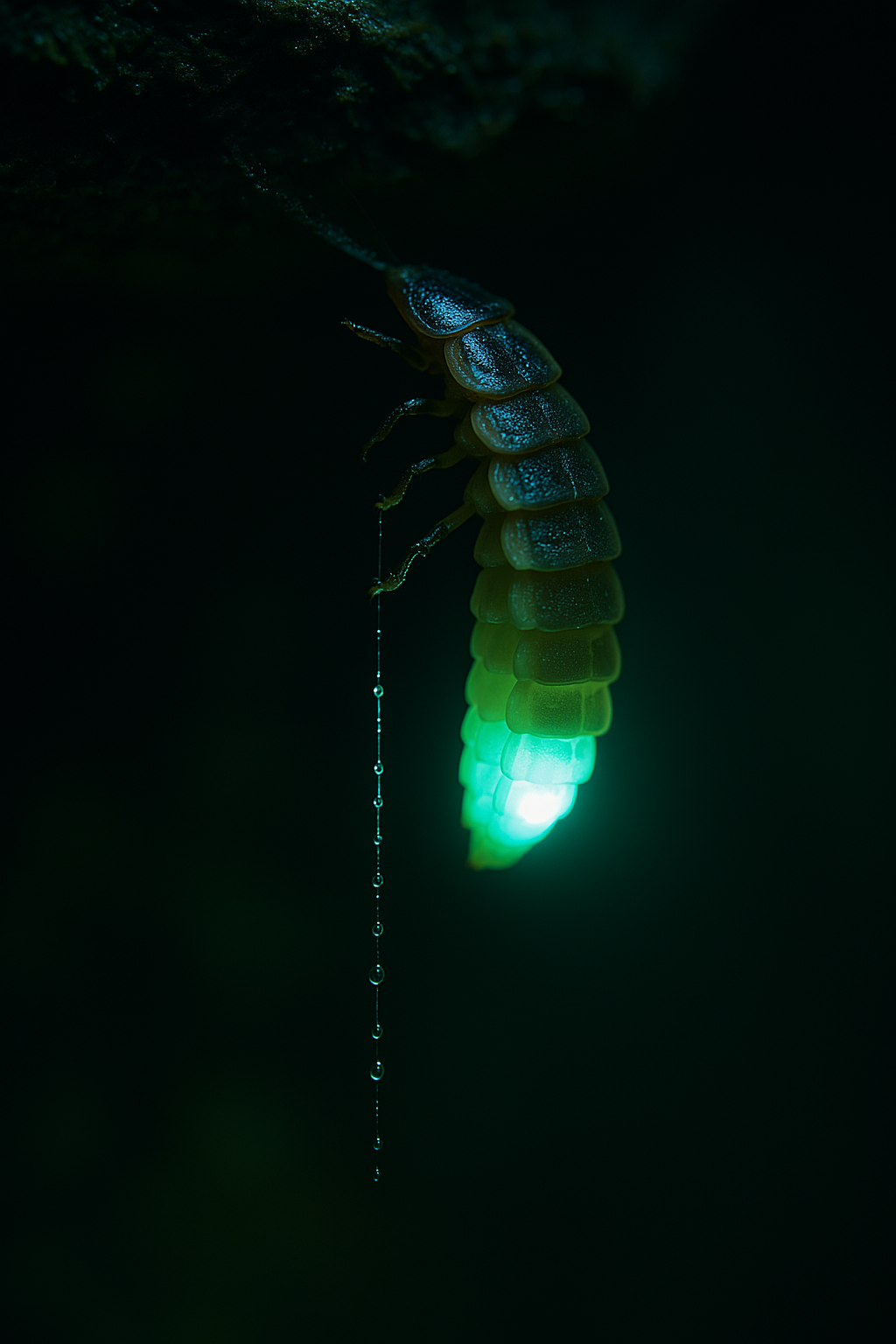
Here is a beautiful image of a glowworm, radiating its signature ethereal light
 seemanair.com
Leave a comment