

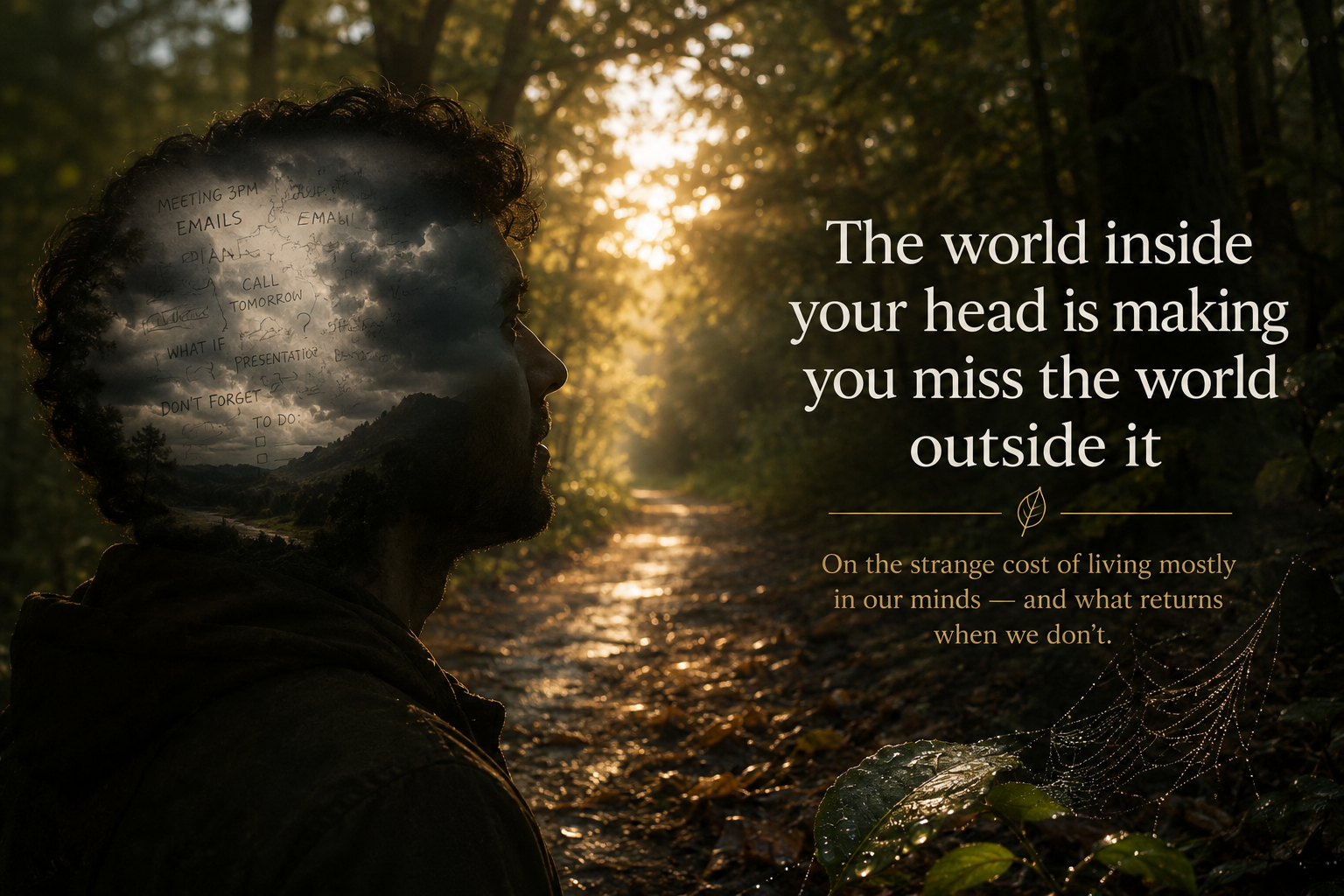
On the strange cost of living mostly in our minds — and what returns when we don’t.
There is a particular kind of walk — one you’ve probably taken — where you arrive at your destination and realize you remember almost nothing of it. The trees were there. The light was doing something interesting in the gaps between leaves. A dog passed. Maybe rain was coming. You don’t know, because you weren’t there.
You were in a meeting that hasn’t happened yet. In a conversation you rehearsed for the fourteenth time. In a version of Tuesday that exists only in the simulation your brain runs continuously, quietly, and without your permission.
We live, most of us, in two worlds. The physical one — textured, smelling of something, changing by the minute — and the interior one we’ve spent a lifetime building. The second one is useful. It lets us plan, anticipate, create. But it has a tendency to expand until it crowds out the first.
“The mind is a wonderful servant but a terrible master — and nature, it turns out, is one of the few things that can remind it who’s in charge.”
The cost of a mind that never stops
Researchers call it default mode network activity — the brain’s background hum of self-referential thinking. Planning, ruminating, narrating the self. It’s the mental equivalent of leaving every app open on your phone. It runs constantly, and it costs something.
What it costs is presence. The ability to notice that the evening sky right now is doing something it has never done before and will never do again. That the texture of bark feels different from what you’d expect. That the silence after rain has a particular quality — not empty, but full.
These aren’t small losses. Studies on attention restoration — pioneered by Rachel and Stephen Kaplan — suggest that exposure to natural environments doesn’t just relax us, it replenishes the very capacity for directed attention that our cognitive lives depend on. We aren’t just more peaceful in nature. We become more capable of thinking.
Little things, overlooked
It’s rarely the grand landscapes that shift something in us. It’s the small, overlooked things. The way a spider’s web catches light at a precise angle for thirty seconds each morning. The smell of soil after the first rain of the season. The sound a flock of birds makes when they change direction in unison — a sound that has no name.
These details are always there. What varies is whether we are.
The mental world we carry is rich and worth inhabiting. But it is not a substitute for the world that exists without our narration — the one that doesn’t wait for us to make sense of it, doesn’t pause for our anxieties to resolve, doesn’t care whether we’re ready. It simply continues, offering itself.
Coming back
There’s no dramatic technique required. The entry point is almost embarrassingly simple: look at something in front of you. Really look — not to evaluate it, not to name it, not to decide how it fits into anything. Just let the information arrive.
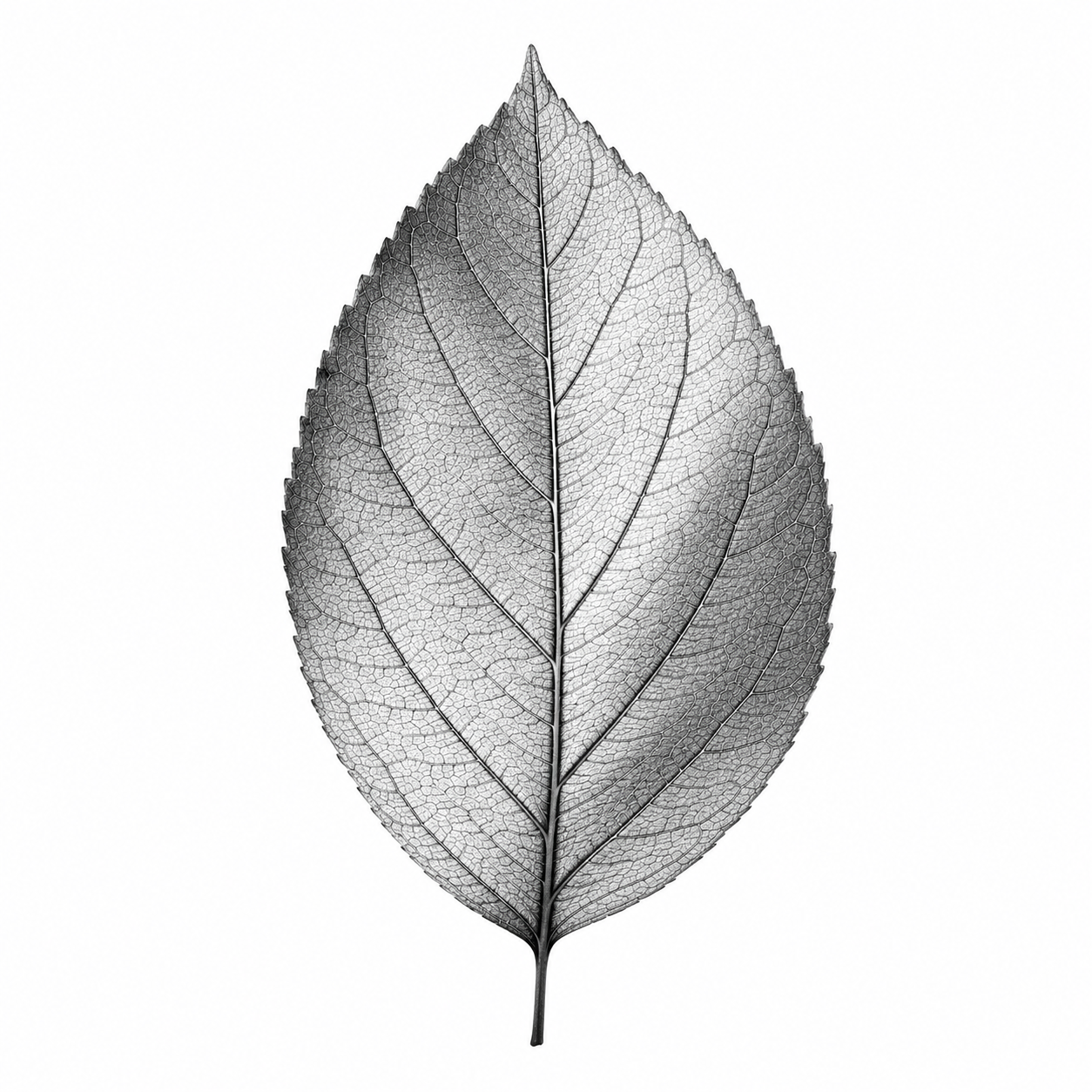
A leaf. The particular shade of afternoon. The way your own hands look right now. Anything real and immediate works, because reality — unlike our mental world — has infinite detail at every scale. Zoom in enough and there’s always more.
This isn’t about abandoning thought or achieving some meditative blank. It’s about remembering that the physical world is not a backdrop to the life you’re living in your head. It’s the other way around.
The meetings will still be there after the walk. The worries won’t leave just because you noticed the light. But you will have been somewhere real for a few minutes — and something about that stays, the way the smell of rain stays in the air long after it’s stopped.





Leave a Reply